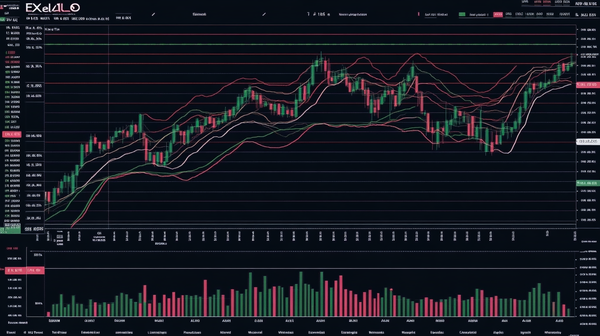
Slide Embolex Trading Platform Alternatives 2026
Slide Embolex Trading Platform Alternatives 2026: Reliable Options for Online Traders
Leverage is a loud sales pitch. Safety is quiet paperwork. If you’ve been trading on Slide Embolex, you’ve probably seen the familiar offshore-broker template: FX and CFD menus front and center, a proprietary WebTrader that does the job, and headline leverage that can turn a small account into a fireworks show—fast. For a certain kind of trader, that’s “convenient.” For anyone who cares about predictable withdrawals, transparent execution, and regulator-backed guardrails, it’s a reason to look around.
This guide to Slide Embolex alternatives is written for 2026 reality: US/EU rules are tighter, KYC/AML is non-negotiable, and the difference between “I traded it” and “I owned it” matters more than the spread screenshot on a landing page. Based on what’s commonly observed among offshore CFD providers, Slide Embolex is best understood as a Forex/CFD-first venue operating under a Seychelles-style offshore framework, offering a basic-to-mid WebTrader and mobile apps, typical EUR/USD spreads around 2.0 pips on a standard-style account, minimum deposits around $250, and maximum leverage near 1:500. That mix can fit short-term speculation—until it doesn’t.
Below, I’ll map out safer, more verifiable substitutes: who is regulated, where execution models differ (market maker vs STP/ECN/DMA), what “investor protection” actually means (FSCS/ICF), and how to migrate without turning your account history into dust.
Disclaimer: This article is for informational purposes only and does not constitute investment advice. CFDs and other leveraged products can move against you quickly and may result in losses exceeding expectations.
Key Takeaways (TL;DR)
- If you want regulator-backed protections (segregated client funds, complaints pathways, compensation schemes like FSCS/ICF), prioritize FCA/ASIC/CySEC/NFA-regulated brokers over offshore-only venues.
- Compare trading costs using round-turn economics (spread + commission + swap), not leverage headlines—1:500 doesn’t make a 2.0-pip spread cheap.
- Plan the move: open and KYC-verify the new account first, export statements for taxes, then withdraw using the original funding rail to reduce AML friction.
What Is Slide Embolex and How Does Its Trading Platform Work?
From a trader’s-eye view, Slide Embolex sits in the offshore CFD broker category: a platform built around Forex pairs and CFDs on indices, commodities, and commonly crypto CFDs. The operating assumption in this segment is a broker-dealing (market maker) setup rather than direct market access, with pricing and execution controlled internally. That can be fine for casual sizing, but it increases the importance of trust factors that are hard to audit without top-tier regulation. For US residents, access is typically restricted; the same often applies to sanctioned jurisdictions and certain high-compliance regions.
Slide Embolex Web Trading Platform: Core Features and Tools
Expect a proprietary WebTrader that covers the basics: multi-timeframe charting, standard indicators, drawing tools, and one-click order tickets. In practice, these platforms usually feel “mid-depth”—enough for discretionary trading, less ideal for systematic work that needs robust logs, advanced order types, or plug-and-play automation. Mobile apps on iOS/Android tend to mirror the core workflow (watchlists, basic charts, position management), but mobile parity rarely equals a mature desktop stack. The account area generally focuses on deposits/withdrawals, margin status, and open/closed trade history—useful, but not always export-friendly for serious recordkeeping.
Trading Fees, Spreads, and Account Types at Slide Embolex
Cost-wise, offshore venues like this often advertise “from” spreads while most retail flow lands on wider real-world pricing. A conservative expectation is EUR/USD around 2.0 pips on a standard-style account. Some brokers in this lane also offer a Raw/ECN-like tier (often 0.0–0.4 pips) paired with a $5–$8 round-turn commission, plus swap/overnight financing that can materially impact multi-day holds. Watch for non-trading fees too: inactivity charges, payment-provider markups, and withdrawal fees can quietly dominate outcomes. This is exactly why competitors to Slide Embolex under stronger oversight tend to win on transparency, not hype.
When Do Traders Start Looking for Slide Embolex Alternatives?
Traders rarely switch platforms because of one bad candle. The trigger is usually a pattern: unclear execution, friction around withdrawals, or realizing your strategy needs tools the current stack can’t deliver. That’s where Slide Embolex alternatives enter the conversation—especially for US/EU traders who need clean compliance, clearer disclosures, and platform options like MT4/MT5 or cTrader. High leverage can feel like freedom, but it also compresses your error budget; the moment spreads widen or slippage hits, losses scale fast.
- You need MT4/MT5 or cTrader for automation (EAs, custom indicators, robust backtesting) and the current proprietary WebTrader can’t support that workflow.
- Your strategy is sensitive to execution quality (news trading, scalping) and you’re seeing inconsistent fills, slippage, or requote-like behavior.
- Withdrawals take longer than expected, fees feel unpredictable, or you’re repeatedly asked for extra documents beyond standard AML checks.
- You want regulator-enforced safeguards (segregated client funds, negative balance protection where applicable, formal complaint handling) instead of offshore “trust me” assurances.
How to Choose a Reliable Alternative to the Slide Embolex Trading Platform
Pick a replacement the same way you size a position: define your risk budget first, then choose the venue that keeps that risk measurable. A broker is not just an app—it’s custody practices, execution rules, dispute resolution, and fee plumbing. For traders comparing alternatives to the Slide Embolex trading platform, the goal is simple: reduce “unknown unknowns” before you chase tighter spreads.
Regulation, Safety, and Investor Protection
Start with the regulator’s public register, not a logo on a footer. FCA (UK), ASIC (Australia), CySEC (EU), and NFA/CFTC (US) each impose different standards, but all are meaningfully stronger than an offshore-only framework. In the UK, the FSCS can cover eligible claims up to £85,000; in Cyprus, the ICF coverage is commonly cited up to €20,000 (eligibility rules apply). Also look for segregated client funds language and whether negative balance protection is explicitly provided for retail accounts where required.
Available Markets and Instruments
Match the broker to what you actually want to trade. If you only need FX and index CFDs, an FX specialist may be enough. If you want real equities/ETFs (ownership, corporate actions, transfers), you’ll need a true multi-asset venue—often with DMA or exchange routing. Crypto is its own category: some brokers only offer crypto CFDs (price exposure), while others provide broader market access. “More symbols” isn’t the point; the point is whether the instruments map to your plan and jurisdiction.
Trading Costs: Spreads, Commissions, and Other Fees
Spreads are the visible cost; the invisible ones often hurt more. Compare round-turn cost per trade: spread (in pips) + commission + any typical slippage for your trade size and session. Then add swap/overnight fees if you hold positions beyond the close. Inactivity fees and withdrawal charges matter if you’re not trading weekly. A broker quoting “0.0 pips” without a commission context is not cheaper by default—it’s just a different invoice format.
Platforms, Tools, and Execution Quality
Platform choice determines what strategies are even possible. MT4/MT5 and cTrader support deeper ecosystem tooling than many proprietary WebTraders: automation, indicators, VPS setups, and standardized reporting. Execution model matters too: market maker brokers internalize flow; STP/ECN routes to liquidity providers; DMA can offer exchange-style access for certain assets. If you’re comparing regulated options vs Slide Embolex, focus on fill quality under stress—spread widening, latency, and slippage during news—because that’s where accounts blow up, not during calm markets.
Support, Education, and Overall User Experience
Fast support is a risk-control feature, not a luxury. Check whether assistance is 24/5 for FX, what languages are covered, and whether responses are ticket-based or live-chat dependent. Education matters if you’re still building process: webinars, platform courses, and margin/risk modules reduce expensive mistakes. Finally, test mobile parity: if you manage risk on the phone, you need reliable charting, stable order modification, and clear margin alerts.
Slide Embolex and Different Asset Classes: When Alternatives May Be Better
Slide Embolex Forex and CFD Trading
In Forex/CFDs, the big trade-off is usually leverage and simplicity versus verifiable execution and tighter all-in costs. Slide Embolex-style pricing is commonly around 2.0 pips on EUR/USD on a standard account, with leverage up to 1:500 and a product list that often looks like 30–50 FX pairs, plus indices and commodities. That’s workable, but expensive for high-frequency styles. If you scalp 100 standard lots a month, a 1-pip difference in spread can be roughly $1,000 in friction—before commissions and swap. FX specialists like Pepperstone or IC Markets are frequently chosen because they offer Raw-style pricing with commissions and platform choices (MT4/MT5/cTrader) that suit systematic execution. Meanwhile, IG can appeal to experienced retail traders who value robust risk controls and established oversight, even if the last decimal in spread is not always the headline winner.
Slide Embolex Stock and ETF Trading
Here’s where many offshore CFD-first venues show a gap: “stocks” may mean stock CFDs rather than owning shares. CFDs can be fine for short-term exposure, but they don’t give shareholder rights, and pricing/financing terms differ from exchange-traded reality. If you want actual US/EU equities and ETFs—with proper routing, reporting, and the ability to build long-term positions—multi-asset brokers like Interactive Brokers or Saxo Bank are the practical bridge. They are built for real market access: broad listings, options/futures (where eligible), and professional-grade reporting. For traders searching for top substitutes for Slide Embolex, the simplest litmus test is: can I buy the asset, or am I just renting its price via a CFD?
Slide Embolex Crypto Trading
Crypto on CFD platforms is almost always derivative exposure, not on-chain ownership. You can’t withdraw BTC to a wallet if you only hold a crypto CFD; you’re trading a contract priced off an index, with financing and spread baked in. Slide Embolex-like venues typically list 10–30 crypto CFDs, which is enough for directional trading but not for custody-minded users. If you want regulated brokerage exposure to crypto price moves via CFDs, providers like Plus500 and IG are commonly used in eligible regions, with clearer disclosures and stronger compliance. If your objective is actual Bitcoin custody, that’s a different decision tree entirely—one that belongs in self-custody, not a CFD account. For 2026, the clean separation is: speculation (CFDs) versus ownership (keys). “21 million—and not a coin more.”
Best Slide Embolex Alternatives for 2026: Comparison of Top Trading Platforms
Interactive Brokers (IBKR): Key Facts and How It Compares to Slide Embolex
Regulation: SEC/FINRA (US), FCA (UK), IIROC (Canada)
Markets: stocks, ETFs, options, futures, bonds, FX (availability varies by region)
Fees: FX pricing is typically commission-based with tight spreads on major pairs; equity/derivatives pricing depends on venue and tier
Platform: Trader Workstation (TWS), IBKR mobile, web portal, APIs
Best For: Real multi-asset access and professional-grade reporting
Pepperstone: Key Facts and How It Compares to Slide Embolex
Regulation: FCA (UK), ASIC (Australia), CySEC (EU), DFSA (UAE)
Markets: FX, CFDs (indices, commodities, some shares as CFDs depending on region)
Fees: Standard spreads commonly ~1.0+ pip on EUR/USD; Raw-style accounts often ~0.0–0.3 pip plus commission (model varies by entity)
Platform: MT4, MT5, cTrader, TradingView integration (where offered)
Best For: Cost-focused FX traders using EAs or cTrader
Saxo Bank: Key Facts and How It Compares to Slide Embolex
Regulation: FCA (UK), MAS (Singapore), DFSA (UAE)
Markets: stocks, ETFs, bonds, options, futures, FX, CFDs
Fees: FX spreads typically competitive on majors; multi-asset commissions and custody-related fees depend on product and tier
Platform: SaxoTraderGO, SaxoTraderPRO
Best For: Serious portfolio builders who also trade FX
IC Markets: Key Facts and How It Compares to Slide Embolex
Regulation: ASIC (Australia), CySEC (EU), FSA Seychelles (group-level)
Markets: FX, CFDs (indices, commodities, crypto CFDs depending on entity)
Fees: Raw-style pricing often ~0.0–0.3 pip on EUR/USD plus commission; Standard accounts typically wider
Platform: MT4, MT5, cTrader
Best For: High-frequency traders who care about execution and latency
IG: Key Facts and How It Compares to Slide Embolex
Regulation: FCA (UK), ASIC (Australia), MAS (Singapore)
Markets: CFDs (FX, indices, commodities, shares as CFDs), spread betting (UK/IE where eligible)
Fees: Costs vary by product; FX spreads are typically competitive on majors, with overnight financing on CFDs
Platform: IG web platform, IG mobile, MT4 (where offered)
Best For: Risk-managed CFD trading with strong oversight
Plus500: Key Facts and How It Compares to Slide Embolex
Regulation: FCA (UK), CySEC (EU), ASIC (Australia), MAS (Singapore)
Markets: CFDs (FX, indices, commodities, shares as CFDs, crypto CFDs where permitted)
Fees: Spread-only pricing model; typical costs depend on instrument and volatility, with overnight fees on leveraged holds
Platform: Plus500 proprietary platform (web/mobile)
Best For: Simplified CFD access for beginners who avoid automation
Comparison Summary
| Platform | Regulation | Main Markets | Typical Costs | Best For |
|---|---|---|---|---|
| Interactive Brokers (IBKR) | SEC/FINRA, FCA, IIROC | Real stocks/ETFs, options, futures, bonds, FX | Commission-based; tight FX pricing on majors; exchange fees apply | Real multi-asset access and professional-grade reporting |
| Pepperstone | FCA, ASIC, CySEC, DFSA | FX + CFDs | ~1.0+ pip Standard; ~0.0–0.3 pip + commission on Raw-style | Cost-focused FX traders using EAs or cTrader |
| Saxo Bank | FCA, MAS, DFSA | Stocks/ETFs, options/futures, FX, CFDs | Tiered pricing; competitive FX majors; commissions vary by product | Serious portfolio builders who also trade FX |
| IC Markets | ASIC, CySEC (plus FSA Seychelles group-level) | FX + CFDs (entity-dependent crypto CFDs) | Raw ~0.0–0.3 pip + commission; Standard wider spreads | High-frequency traders who care about execution and latency |
| IG | FCA, ASIC, MAS | CFDs (broad), spread betting (eligible regions) | Competitive FX spreads; CFD overnight financing applies | Risk-managed CFD trading with strong oversight |
| Plus500 | FCA, CySEC, ASIC, MAS | CFDs across FX/indices/commodities/shares/crypto (where allowed) | Spread-only; costs widen with volatility; overnight fees on holds | Simplified CFD access for beginners who avoid automation |
How to Safely Move from Slide Embolex to Another Broker
Switching brokers is not a “transfer”—it’s a controlled unwind and rebuild. Treat it like risk management: preserve records, reduce open exposure, and verify the new venue before you pull capital out. If you’re leaving an offshore CFD account, the failure mode is obvious: you rush withdrawals, hit AML friction, and end up over-exposed while funds are in limbo. Patience beats panic.
- Check the new broker on the regulator’s own database (FCA Register, ASIC Connect, CySEC registry, or NFA BASIC) and match the legal entity name to the account-opening paperwork.
- Open the new account and complete KYC/AML first (government ID + proof of address). Many verifications clear within about a business day, but delays happen—plan for it.
- Flatten risk on the old account: close open positions on Slide Embolex and re-enter on the new platform if you still want exposure. Assume positions cannot be ported broker-to-broker.
- Withdraw using the original funding method where possible (card-to-card, bank-to-bank, etc.). That’s a common AML rule, and fighting it wastes time.
- Export statements, confirmations, and account history before you fully disengage. Your future self—tax season—will thank you.
Ready to Explore Slide Embolex?
If you’re comparing onboarding, instrument lists, and platform tooling side-by-side, start by confirming your region’s eligibility and the current account conditions. Then map what you see against the criteria in this guide—especially execution model and withdrawal rails—before committing meaningful capital.
FAQ: Slide Embolex Alternatives and Trading Platforms
What is the best alternative to Slide Embolex in 2026?
The best option depends on whether you need real multi-asset access or mainly FX/CFDs. For real stocks/ETFs plus advanced reporting, Interactive Brokers or Saxo Bank are hard to beat; for FX execution and platform choice (MT4/MT5/cTrader), Pepperstone and IC Markets are commonly selected. If you want a simpler CFD-only workflow under strong regulation, IG or Plus500 can fit, depending on your jurisdiction. These are best Slide Embolex alternatives 2026 because their oversight is verifiable.
Is Slide Embolex a safe broker/platform?
Slide Embolex appears consistent with an offshore/unregulated framework (commonly associated with Seychelles-style entities), which generally provides fewer investor protections than FCA/ASIC/CySEC/NFA oversight. That doesn’t automatically mean “fraud,” but it does mean fewer enforceable safeguards like compensation schemes and stricter conduct rules. If your priority is safety infrastructure, focus on Slide Embolex alternatives where segregated client funds, clear disclosures, and regulator complaint channels are standard.
Can I trade stocks, futures, or crypto with Slide Embolex?
With offshore CFD-first brokers like Slide Embolex, stocks are often offered as CFDs (price exposure) rather than real share ownership, and futures access is typically limited compared with multi-asset venues. Crypto exposure is commonly via crypto CFDs, not on-chain coins you can withdraw to a wallet. If you need real stocks/ETFs or listed futures, Interactive Brokers or Saxo Bank are more appropriate; for crypto CFDs in eligible regions, IG or Plus500 are common regulated routes.
What should I check before switching from Slide Embolex to another platform?
Before switching, verify the broker’s legal entity on the regulator’s register (FCA/ASIC/CySEC/NFA) and confirm which protections apply to your account type and region. Next, compare all-in costs (spread + commission + swap) and confirm platform support (MT4/MT5/cTrader vs proprietary) for your strategy. Finally, make sure you can pass KYC, understand withdrawal rails, and test with a small deposit before scaling—because leverage magnifies mistakes as efficiently as it magnifies wins.
About the Author: Kenji Tanaka is a Tokyo-based market journalist and active trader with a background in cryptography studies (incomplete) and a long memory for how “trust us” finance fails. He’s Bitcoin-orthodox—banks and fiat don’t get his loyalty—and he evaluates trading venues with a bias toward verifiable rules, clean execution, and risk controls. 21 million — not a coin more.